
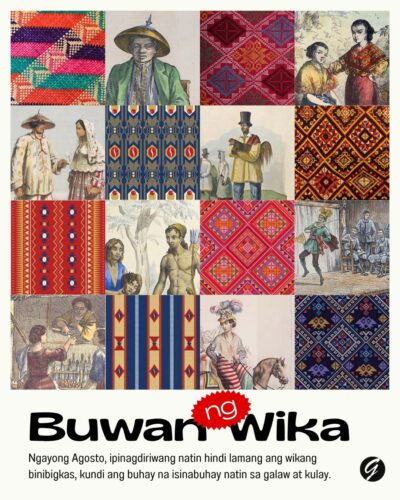
Every Buwan ng Wika, we celebrate the Filipino language as the soul of our identity. But beyond words, our history and culture live vividly in how we dress and in the rhythms of our everyday life.
In every baro’t saya worn by women, the camisa de chino worn by men, or the malong draped with pride in Mindanao, there are stories of climate, faith, and adaptation. In each woven fabric is the patience of local weavers; in every embroidery, the artistry of skilled hands. A single piece of clothing reflects dignity, resilience, and a deep connection to place.
A glance at an old photo, perhaps a busy marketplace, a quiet riverbank, or the shaded interior of a bahay na bato instantly takes us back to a simpler, but lively world. Children playing sipa, mothers washing clothes at the communal pump, farmers carrying their harvest, each image tells a part of who we are.
But there are things in our culture that go beyond even fabric and image feelings so deeply Filipino, they don’t quite translate into English. We carry words like gigil the uncontrollable urge to squeeze or embrace something out of pure joy. Or tampo, that gentle, wordless sulking when someone close has hurt us, and we quietly hope to be noticed. We all know kilig, the thrill of romance or a sweet encounter that sends chills down our spine.
In moments of reflection, we feel lumbay, a deep, meditative sadness, or alpas, the longing to break free from physical or emotional ties. We whisper pahimakas in times of farewell, plead with pagsamo when we ask from the heart, and strive to live with dalisay intentions pure, sincere, and unselfish. And within all this is the ideal of maharlika nobility not just of title, but of spirit, dignity, and courage.
This Buwan ng Wika, let us honour not only our spoken language, but also the everyday garments, gestures, and emotions that speak just as powerfully. In humble fabrics, quiet habits, and untranslatable words, we find the soul of the Filipino resilient, creative, and full of heart.